


What the Middle East Conflict Could Mean for Pricing and Availability in the Electrical Supply Chain

We’ve all felt the effects of the ongoing conflict in the Middle East in one way or another, whether that’s higher fuel prices, disrupted travel, or the general rise in day-to-day costs.
Over the last few weeks, there’s also been more discussion across our industry about what this could mean for pricing, raw materials, product availability and lead times. The wider picture points to growing pressure on energy, shipping and key materials, all of which can have a knock-on effect on the supply chain over time.
We’re not sharing this to worry anyone. This is simply a practical heads-up so our customers can plan ahead more confidently and avoid any unnecessary surprises down the line.
Below, we’ve broken it down simply:
what’s happening
what it could mean for our industry
what it could mean for customers
and how we can support you moving forward
What’s happening?
At the moment, the biggest pressures being discussed across the industry are around transport, freight, fuel and raw materials.
Transport and freight are under pressure
One of the biggest concerns is the movement of goods. Current concerns include:
Gulf ports pausing operations
voyages through the Strait of Hormuz being put on hold
transport from the EU increasing due to fuel surcharges
container freight rates reacting to the same pressure
UK road haulage surcharges increasing alongside higher fuel costs
air cargo networks seeing more immediate disruption
reduced cargo capacity and longer routes, as shipments are not always taking the shortest or quickest path
Ocean Freight: This may not come to a surprise as we have seen it all over the news but currently the Gulf ports have paused operations and routes through the Strait of Hormuz (20% global oil transits) have been disrupted/on hold. Major shipping lines have suspended services and new bookings in parts of the Middle East. Reuters has reported that freight rates may ease if conditions improve, but any recovery is expected to be gradual rather than immediate.
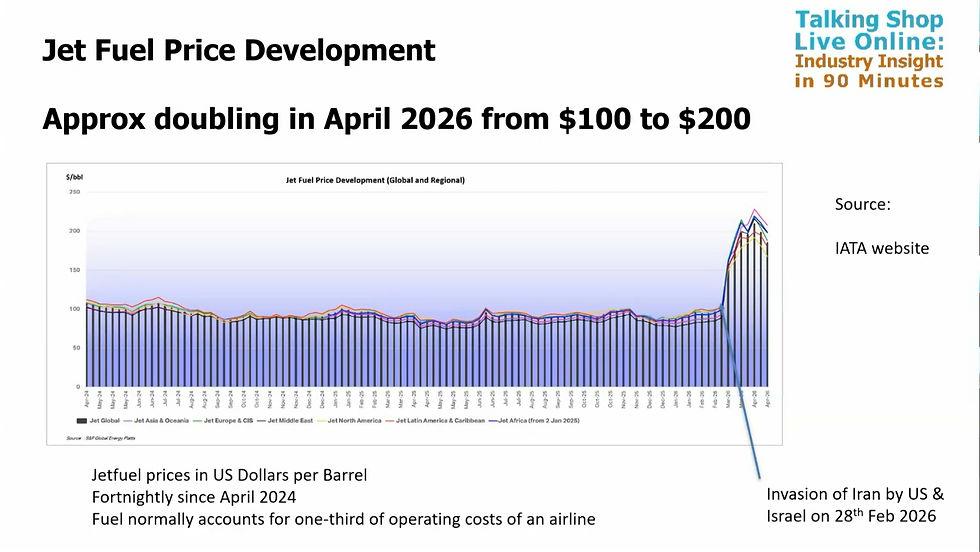
Jet fuel: One of the more immediate watchpoints is air freight, where jet fuel prices have effectively doubled and capacity is under pressure. That means anything relying more heavily on air cargo could become more expensive or less predictable more quickly than sea freight.
Fuel costs are filtering through:
As highlighted in a recent industry discussion, UK road haulage is already feeling the effect of rising fuel costs, with surcharges increasing around:
.25p on petrol
.48p on diesel
That matters because even when products themselves are available, the cost of moving them through the supply chain starts to rise, whether that’s import, transport from Europe, distribution across the UK, or local delivery.
Raw material pressures were already there, and this adds more
Raw material pressure is not entirely new. Some issues were already developing before the latest conflict, particularly around copper.
But there are now additional material concerns being talked about, including:
Silver, which has increased by 139% in the last 12 months and is widely used in electrical switches, contacts and circuit protection components
Brass and sheet metal, which affect products such as enclosures
A wider group of oil-derived materials, which sit behind many everyday electrical products
That includes:
PVC insulation for cables
plastic conduit and trunking
electrical enclosures
wiring accessories
Higher energy prices also influence manufacturing costs more broadly, particularly for metal-based products and components.
What Could This Mean for Our Industry?
The most important thing to say is that this does not currently look like a major immediate supply crisis across the board. The bigger issue is that the market could become a bit more volatile.
In practical terms, that may mean:
more pressure on transport costs
more movement in freight pricing
longer lead times on selected lines
supplier price increases or surcharges with less notice
more pressure on categories using metals, plastics and electronic components
For our industry, the product areas most likely to be sensitive are those that rely on:
metals
plastics and insulation
sheet material
component-heavy manufacturing
imported freight routes
That could potentially affect categories such as:
cables
conduit and trunking
enclosures
wiring accessories
switches and contacts
circuit protection products
other component-led electrical items
Again, that doesn’t mean all of these products will suddenly rise or become difficult to get. It just means these are the areas where pressure is more likely to build if current conditions continue.
What Does This Mean for Customers?
For customers, the main message is not “rush out and buy now.”
It’s more a case of: if you’ve got bigger jobs, more specialist products, or anything with tighter timings, it may be worth planning a little earlier than usual.
The likely short-term effects, if pressure continues, are more likely to be things like:
pricing moving more often than usual
less notice before increases
selected items becoming a little less predictable on lead time
more variation across categories depending on material and freight exposure
In other words, this is more about setting expectations than sounding the alarm.
The market may remain manageable, but it may also become a little less forgiving of last-minute assumptions.
What Should Customers Keep an Eye On?
A few sensible things to be aware of over the coming months:
larger or project-based orders where timings are tight
products that depend heavily on metal or plastic content
imported lines or component-heavy items
categories such as cables, enclosures, accessories and circuit protection
anything where pricing certainty is important before quoting or ordering
If you’ve got work coming up, especially larger jobs or anything more time-sensitive, it may be worth checking:
lead times
stock positions
current pricing
How We Can Help
The aim is simply to help customers stay informed and plan ahead where needed. Good communication becomes especially important in periods like this, because it helps everyone in the supply chain make better decisions and manage expectations more effectively.
As things stand, stock levels are generally still healthy, and the wider industry view remains manageable. But if transport costs, surcharges or raw material pressures begin to feed through more visibly, we’d rather customers are aware of that early.
If you’ve got projects coming up and want to sense-check availability, lead times, pricing or alternatives, speak to your local 7 Core branch by getting in touch with us using our Contact Form. We’ll always do our best to keep you informed and help you plan ahead with confidence.
Final Thoughts
At the moment, the situation remains manageable, and that’s important to stress.
But with transport disruption, fuel surcharges and raw material pressure all sitting in the background, it makes sense to stay alert. This is not about expecting the worst. It’s simply about understanding that the market may become a little more changeable over the coming months.
A bit more planning now could help avoid a few more headaches later.


Comments